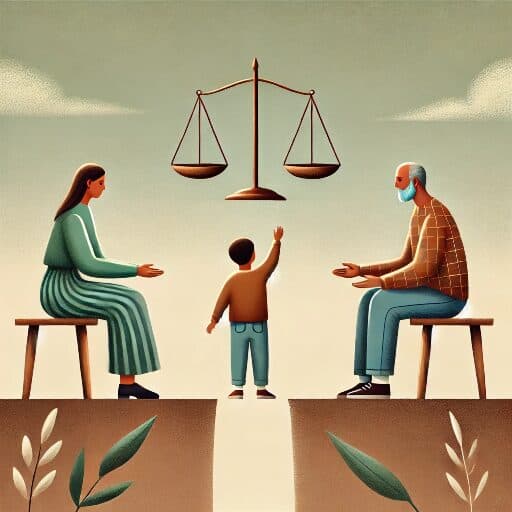
What about "listen to the child"?
Does "listen to the child" mean that the child should choose between the parents when they separate?
Across the Western world, courts and professionals are told to listen to children. This comes from Article 12 of the UN Convention on the Rights of the Child, and from the rule that a child’s best interests always come first. But listening to a child is not the same as letting them decide. Children don’t yet have the life experience or brain development to fully understand what choosing one parent over the other really means, long-term.
Child psychiatrist Dr. Kirk Weir worked with the National Health Service for 35 years. He studied children in England and Wales who refused contact with a parent — a country where courts must, by law, take a child’s wishes and feelings into account.
Dr. Weir was surprised by how much hatred some children showed toward a parent they had once loved. At first he hesitated to make children see that parent again. But when he did, the result was often very different from what the child had said they wanted. In one case, two young children hadn’t seen their father for two and a half years. They were afraid at the start of a supervised visit. Within about fifteen minutes, they were playing, smiling, and talking about happy memories with him.
Across 58 contact-resistant children Dr. Weir evaluated this way, 34 went on to have a good or reasonable contact visit with the parent they had refused to see, while 24 remained resistant. The study also found very high rates of successful reunion among younger children — 100 percent for children under 5, and 40 percent at the first visit for children over 8 — leading Weir to conclude that children’s stated wishes not to have contact were often extremely unreliable.
Sources
[peer-reviewed study] Weir, K. (2011). Intractable Contact Disputes — The Extreme Unreliability of Children’s Ascertainable Wishes and Feelings. Family Court Journal 2(1).
Go deeper: how to tell the difference →
Parental alienation is not a medical or psychiatric diagnosis. What is recognised is that some parents behave in ways that damage a child’s relationship with their other parent, and that this can seriously harm children — and equally, that a child may refuse contact for good reasons, including abuse. Nothing here is a diagnosis or legal advice. What this site does and doesn’t claim.