Frequently Asked Questions
Parental alienation is not a medical or psychiatric diagnosis. What is recognised is that some parents behave in ways that damage a child’s relationship with their other parent, and that this can seriously harm children — and equally, that a child may refuse contact for good reasons, including abuse. Nothing here is a diagnosis or legal advice. What this site does and doesn’t claim.
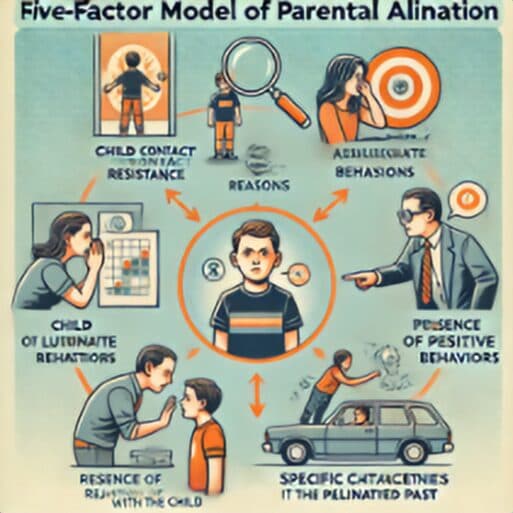
The Five-Factor Model helps to distinguish parental alienation and parental estrangement.
The Five-Factor Model, explained
There are 8 common behavioral symptoms of parental alienation.
The 8 behavioral signs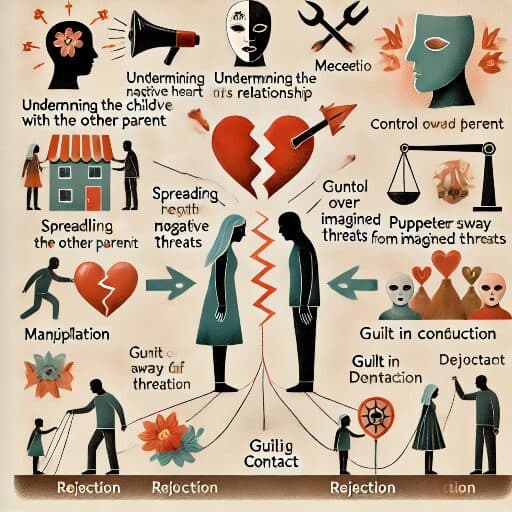
There are 17 common alienating behaviors.
The 17 alienating behaviors
Some researchers compare it to cult thought-reform. Courts in Germany and the UK, and other researchers, reject that framing entirely — here’s both sides.
The thought-reform comparison, explained
Some jurisdictions treat severe parental alienation as a form of child psychological abuse — others don’t. Here’s where the line actually falls.
Where this is recognized as abuse
No — parental alienation itself was rejected as a diagnosis for DSM-5 and DSM-5-TR. Five related codes describe adjacent territory, but don’t name it.
What the DSM-5 actually says
Severely alienated children do not give reliable explanations of their feelings and opinions.
Why children's stated wishes can be unreliable