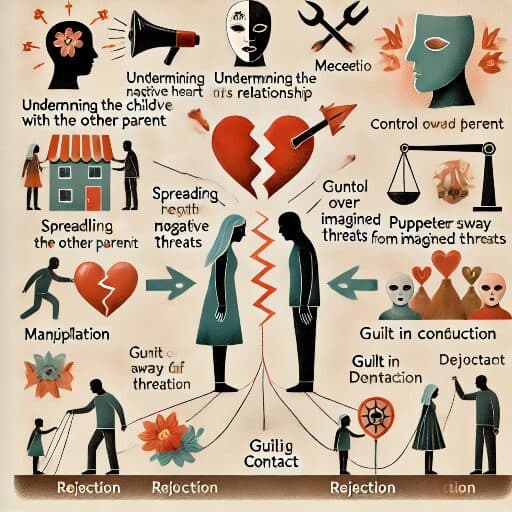
What are alienating behaviors?
Researchers have identified 17 alienation strategies, which can be grouped into six categories.
- Badmouthing
- Limiting contact
- Interfering with communication
- Interfering with symbolic communication
- Threat of withdrawal of love
- Telling the child that the targeted parent is dangerous
- Forcing the child to choose between the parents
- Telling the child that the targeted parent does not love them
- Confiding in the child
- Forcing the child to reject the targeted parent
- Asking the child to spy on the targeted parent
- Asking the child to keep secrets from the targeted parent
- Referring to the targeted parent by first name
- Referring to a stepparent as "Mom" or "Dad"
- Withholding important information from the targeted parent
- Changing the child’s name
- Undermining the authority of the targeted parent
Steven Miller organized these 17 strategies into six groups: badmouthing, limiting contact, erasing of memories, undermining trust, undermining authority, and undermining love.
Sources
[peer-reviewed study] Baker, A. J. L., Darnall, D. (2006). Behaviors and Strategies Employed in Parental Alienation: A Survey of Parental Experiences. Journal of Divorce & Remarriage 45, 97–124.
If some of this sounds like you: things worth checking →
Parental alienation is not a medical or psychiatric diagnosis. What is recognised is that some parents behave in ways that damage a child’s relationship with their other parent, and that this can seriously harm children — and equally, that a child may refuse contact for good reasons, including abuse. Nothing here is a diagnosis or legal advice. What this site does and doesn’t claim.